
Experience
The imbus Academy can draw on over 25 years of experience in training and educating Software Engineers. Our trainers have sound, specialist training and many years' experience in adult education. In addition to their work as trainers, they are all involved in projects in the specialist areas they teach, so they are able to illustrate the content of their lectures with many practical examples.
ISTQB® Certified Tester-Certificates
In the course of time, imbus employees have acquired more than 750 ISTQB® Certified Tester certificates. For so much profound expertise in the field of software testing, the International Software Testing Qualifications Board ISTQB® has awarded the imbus AG the status of Global Partner.

imbus has been involved in the ISTQB® Certified Tester from the very beginning. We co-founded the training scheme and have been an accredited ISTQB® training provider since 2002. We are the first provider to offer all Certified Tester training levels.
At the imbus Academy Germany, we can look back on over 20,000 participants in Certified Tester training courses in classroom training, online training and e-learning courses in blended learning format.
imbus Academy stands for:
- Market Leadership: With over 25,000 training course participants, imbus is one of the world's leading training providers for software quality management and software testing and is the market leader in the training of software testers in Germany.
- Internationality: On request, we can deliver any of our courses in English to your desired location worldwide. For courses in local languages, we work with co-operation partners in selected countries. In North America, our colleagues from imbus Canada are at your service.
- Excellence: Personal contact, pleasant atmosphere, open exchange of ideas, and trainers with practical experience: these are the reasons why our course participants regularly evaluate our training courses and trainers at the level “very good”.
- Responsibility: imbus has been one of the pioneers of the international training standard ISTQB® Certified Tester, and is actively and is significantly involved in the further development of this standard at a national and international level.
According to the new GTB label: direct, interactive, learning!
When participants and trainers communicate synchronously via online tools at different locations, the technical and methodological design of the seminar must optimally support the participants' communication with each other and with the trainer.
This includes didactic care, excellent trainer qualifications and smooth event organisation, as well as the appropriate use of images, sound and text/chat in interactive real-time exchanges.
Only seminars and training courses delivered in this way can meet our quality standards. And these are the live online seminars as defined by the GTB.
What we do
Our courses challenge and encourage you individually.
You will interact with trainers and participants.
You can always share your experiences and comments.
You can track your progress at any time.
Our online training is more than just presence without a classroom.
We bring variety to the learning experience.
We encourage good group dynamics and lively discourse.
Our trainers are experienced and highly qualified, enabling them to be confident, flexible and professional in the online seminar environment.
What a good learning environment is for face-to-face seminars, our virtual classroom is for online courses.
We are with you before, during and after the training!
With live online seminars, a lot depends on the technical infrastructure - we won't let you down!
Our courses challenge and encourage you individually.
This is not only important for face-to-face seminars.
In live online seminars, trainers and participants are connected by virtual classroom tools with bi-directional feedback options, so that our trainers can respond promptly to messages from individual participants throughout the virtual event, supporting the learning process.
As a participant, you will find plenty of space to take notes, ask questions or work on exercises. Fixed time slots for questions allow you to ask your questions live.
In live online seminars, you can also use the chat feature to send your questions to the group or individually to your trainer, who can then either send the answers directly or incorporate them into the teaching process.
You will interact with trainers and participants.
Supported by technology and facilitated by the trainer, online training allows you to interact in real time. You have the opportunity to ask questions, make suggestions or contribute your own content using chat functions in the group or individually to participants or trainers, and to report back using the 'handshake' function. If you enable video, our trainers can see you and respond to you directly, just as they would in a face-to-face seminar.
Breakout rooms allow you to work in small groups on exercises or present your own solutions on the virtual flipchart.
Surveys and question-and-answer sessions via audio and video conferencing, as well as worksheets filled in by participants, give your trainer an idea of how each person in the group is progressing.
In practice and review sessions, participants are also encouraged to become active and present small pieces of knowledge themselves.
The more complex the learning content (indicated by the K levels in the ISTQB standard syllabi), the more intensive the interactive collaboration in the learning group during its development.
This sets our courses apart from lectures, self-study courses or pure collections of material.
You can always share your experiences and comments.
Regular chapter or daily reviews, as well as spontaneous short surveys (flashlight method) and question rounds, will allow you to share your suggestions about the course with your trainer.
You can report back virtually using the "handshake" feature with commentary via the audio channel in the Virtual Classroom tool used when the trainer calls it up - or you can use one of the available chat channels, either to the trainer directly or to the whole group.
At the end of each course, you will receive a detailed feedback sheet, giving you the opportunity to describe your impressions in as much detail as you wish, as well as suggesting areas for improvement.
We welcome your feedback, even during the course, as we want to make our courses the best possible learning experience for everyone. But even after the course, our QA thrives on your feedback. It is used for personal reflection by the trainers and for continuous improvement at all levels of the training, from the course authors to the support and monitoring of specific events - and where it concerns our partners, it also reaches them. For example, the examination centre, external venue providers, the German Testing Board or, through our participation in various working groups, the ISTQB itself.
You can track your progress at any time.
As a participant in our courses, you will complete exercises which will be debriefed by the trainer with your learning group. This allows you to understand, discuss and compare different solutions. The trainer will ensure that you achieve the learning objectives associated with the exercises. If required, you can complete optional exercises in the course or as 'homework' and debrief the next day.
The polling feature allows you to let everyone work out the questions for themselves first. For example, selected high quality sample exam questions. The discussion of correct and incorrect answers is done in the same way as the usual dialogues via audio connection, but also with the help of flipcharts or visualisation tools such as an electronic whiteboard.
We use tried and tested methods, such as card quizzes and quizzes, to help you check that you have understood the material and whether you need to revise it. And because you learn best when you explain things yourself, you will occasionally be asked to present sections of the material yourself after you have prepared them.
The numerous question and answer sessions throughout the course are most effectively used at the end of each chapter or topic, not only to answer the question you have just asked, but also to ask your own questions about the material and the learning objectives of the underlying curriculum.
Are you a visual learner or an auditory learner? Do you learn better through cognitive or kinesthetic methods? We engage all the senses!
In terms of visual aids, we use a wide range of tools in all our seminars: Online, just as in a physical training room, you’ll see not only the trainer but also the presentation slides, flipchart, and whiteboard notes – complete with numerous visual aids such as Bikablo graphics and mind maps – all displayed in parallel windows.
If you enable the video feed, our trainers can see you and respond directly to you, just as they would in an in-person seminar. We also like to incorporate other media, such as videos, or take a look at the syllabus together when appropriate.
There is also plenty to hear: our trainers don’t just lecture, but engage in direct dialogue with you, offering all the possibilities of an in-person event. And of course, the audio from presented videos can also add variety to the training day.
By having you complete exercises on paper, we also activate the tactile and kinetic aspects of your learning ability and ensure the most holistic learning experience possible. Whenever possible, we like to integrate tests on concrete objects into the training sessions; even your cell phone can serve as a prop. Cognitively and communicatively, we engage you through exercises in small groups, question-and-answer sessions, and group discussions – for example, during the trainer-led review of course material.
Our online training is more than just classroom training.
Our trainers have created trainer guides specifically for online training. They are based on our experience of online training and include best practice and tips for using the technology in different studios and with different tools. We have established the use of electronic and physical presentation techniques and described their implementation in video transmission in the virtual classroom. But it also includes very practical considerations such as scripting for the medium, with time-limited modules and quicker changes of learning blocks and breaks.
Accordingly, we have reorganised our online courses to include several shorter breaks followed by activation sequences.
We bring variety to the learning experience.
In our documents and learning media, we convey the course content through an interplay of text and visualising graphics such as bicablo graphics and mind maps, through designed slides, through graphics created during the discussion on the whiteboard, or through pre-designed flipchart series.
In our exercises we like to combine playful elements with exercise projects to be worked on individually or in a group. We also like to incorporate other media such as videos, or take a look at the syllabus together if necessary.
Sample exam questions and short presentations help you practise reproducing what you have learnt. You will also be actively involved in lightning rounds, discussions, polls using the polling tool and chat.
Our trainers can take you from the meta-level of theoretical observation to the description of concrete implementation of the content at any time, as they are able to explain the content using examples from their own professional experience.
We encourage good group dynamics and lively discourse.
In addition to a variety of methods and a didactic approach appropriate to the subject, the characteristics of the learning group are an important factor in the course.
In the case of in-company seminars, we will advise you on the most appropriate course format for your intended group of participants. In addition to the specific objective of the event, the size of your learning group, the type of prior knowledge available and the homogeneity of the knowledge base across the group are important factors.
We also like to take into account the different backgrounds of the participants and integrate them into the learning event. For example, who could give a more convincing account of the developmental perspective of a test than a fellow student who comes from that very background?
For open seminars, we have the same maximum group size for both face-to-face and online seminars. For intensive courses it's usually 10 people and for regular seminars it's usually 12 people.
Even for corporate events, we will only deviate from these group sizes at the client's request and in consultation with the client. In this case, a second trainer can be sent for online breakouts or more intensive hands-on support on site - or we can simply split the course into two groups.
Our teaching experience also includes lecturing at universities and colleges and at trade shows, where we have had triple-digit delegate numbers, but we are primarily dedicated to intensive methods and hands-on training, where the number of delegates is always well below 20, even when a second trainer is used.
Our trainers are experienced and highly qualified, enabling them to be confident, flexible and professional in the online seminar environment.
Our trainers are our greatest asset!
In addition to their talent and enthusiasm for training, they have many years of experience, both from project work in the subject areas they teach and from successfully delivering method training to participants from different industries, with different levels of prior knowledge and training objectives.
But we do not rest on our laurels!
Our trainers continue to train! They maintain their didactic tools as part of internal imbus induction and further training measures, as well as in seminars on soft skills, presentation and moderation, presentation techniques and e-learning, or in "train the trainer" tutorials, such as those offered exclusively by the German Testing Board to its partners. Trainers who deliver or prepare to deliver live online training also take part in specially designed training courses. And, of course, our trainers coach each other, exchanging strategies for delivering specific content, experiences of specific training situations in face-to-face and online seminars, as well as general areas for improvement in presentation techniques and document design.
The online training formats of the imbus Academy not only benefit from our trainers' already extensive experience with online teaching! The new push in this direction has led to many more suggestions, which we are eager to take up and develop further. We have developed new, particularly practical course formats. The experience gained from these seminars is now being incorporated into the didactic design of our standard courses!
What is a good learning environment for face-to-face seminars is our virtual classroom for online courses.
Learning needs a good environment! For face-to-face seminars, we ensure that our training rooms are easily accessible, quiet, spacious and conducive to concentration on the material. We provide full catering so that our participants can concentrate fully on the seminar and on group interaction during the breaks.
It is also important that our trainers are familiar with both the presentation technology and the technical environment in which they are training, so that they can, for example, confidently operate a tool or test environment that is used as an example in the course.
For online training, we have been equally uncompromising in finding the best environment for the training situation. Not only do we ensure the security of your data, for example by choosing a provider that is based in Germany and whose servers are located within the European legal area. Our software also supports the different didactic approaches we use, such as question and answer sessions or group work, and allows the use of different techniques and media. This allows us to cover the full range of methods, from the classic flipchart to embedded video.
Our trainers have been trained in the use of these tools and have optimised the learner experience by developing their own infrastructure, so that the optimum learning situations can be recreated in line with a face-to-face seminar and at the same time the additional options such as breakout rooms or surveys and chats can be used and integrated smoothly into the process.
We are with you before, during and after the training!
In advance of a live online training session, we will send you information about the virtual classroom software that will be used in the session and the associated system requirements.
This will allow you to check your system in advance, identify the most suitable environment for your participation and ensure its availability at the time of the training.
Your virtual classroom will be up and running well in advance of the training, and our trainers will be on hand to help with any minor technical issues that may arise during the training. In addition, both the trainers and you, the participant, can contact the Academy's training organisation at any time. The Academy's training organisation works in the background during each training session and is available by e-mail and telephone to provide organisational support before, during and after the training.
With live online seminars, a lot depends on the technical infrastructure - we won't let you down!
No technology without testing!
For all online training courses, we schedule a technical check with the entire group at least one week before the start of the course to ensure that the virtual classroom works smoothly on the terminals used by the participants.
If something is not working, both the participants and the academy will have enough time after this check to find a solution.
The imbus coaching team for Europe

André Baumann
Co-founder and managing director of imbus Rheinland GmbH. Over 35 years of project experience in the design, implementation and QA of complex enterprise applications. Trainer, consultant and coach in the field of SW-QS. Author of ISTQB® training courses and numerous articles on OOAD, e-business and software quality assurance.

Arne Becher
Head of the imbus Academy. Many years' experience as a senior consultant for software quality assurance and testing, focusing on test design, management and automation, as well as auditing and process improvement. More than 20 years' experience as a trainer for ISTQB® Certified Tester Foundation and Advanced Level courses. Participation in working groups of the German Testing Board.

Matthias Daigl
Senior Consultant Software Quality, Test Manager, Product Owner and Trainer for Software Quality Management and Testing. Development of training courses on software test. Speaker at international conferences. Participation in working groups of GTB e.V., ISTQB®, ASAM and the standardisation committees of DIN and ISO. Editor of the ISO/IEC/IEEE 29119-5 "Keyword-Driven Testing" standards project, author of the reference books " ISO 29119 – Die Softwaretest-Normen verstehen und anwenden" and "Keyword-Driven Testing".

Dr. Ricarda Dormeyer
Senior consultant and trainer for software testing, test tool design, document review and verification. Development of training courses for ISTQB® Certified Tester Advanced Level and customer specific training. Lecturer for Software Testing at the Technical University of Nuremberg.
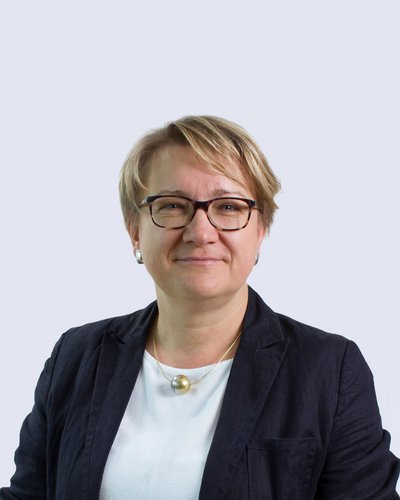
Dr. Klaudia Dussa-Zieger
Head of Consulting at imbus. Senior Consultant for Test Management and Test Process Improvement. Trainer for ISTQB® Certified Tester Foundation and Advanced Level. Lecturer for software testing at the University of Erlangen-Nuremberg, Chairwoman of the DIN working committee "System and Software Engineering". Contributor to the test standard ISO/IEC/IEEE 29119. Member of the GTB. President of the ISTQB.

Klaus Erlenbach
Senior Consultant and trainer with the main focus of ISTQB® Advanced Level and CAST. More than 25 years of experience as a software developer, software tester and consultant with the core competences of data transmission protocols, test automation, TPI and SPICE in the fields of automotive, medical technology, process control and remote control technology.
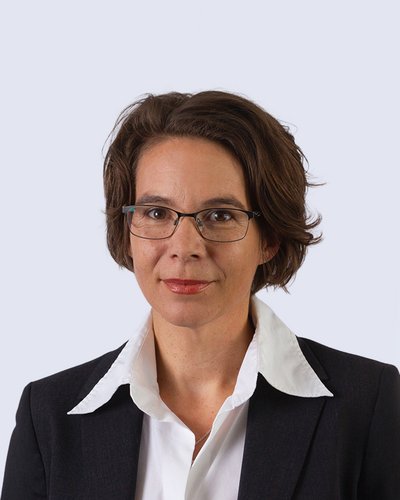
Sabine Gschwandtner
Senior Consultant, over 15 years as a trainer for ISTQB Foundation and Advanced Level. Coach for new ISTQB trainers. Product owner and author of several ISTQB trainings, trainings on special topics and customised trainings. Collaboration in development and test projects in various industries in test management, development, design, specification and execution of tests. Collaboration in reviews of ISTQB curricula.

Michael Heller
Test and software quality consultant, assessor for test process analysis and improvement, trainer and author of training courses. Responsible for the development of the consulting and solution portfolio for agile testing. Over 15 years' experience as a strategic consultant for standard software implementations and as a product owner.

Christian Kupfer
Senior Test Management Consultant. Test Manager and Software Testing Trainer. Extensive experience in embedded HW/SW development, test and test automation in the automotive and medical sectors.

Arnd Pehl
Arnd Pehl Senior consultant and trainer for quality assurance, system and acceptance tests, test management, test automation, IT security and requirements engineering. Planning, management and execution of system tests for large medical devices. Process consulting and requirements engineering. ISO 9001 and ISO 27001 audit support.

René Rohner
Consultant for software testing, trainer and author of trainings for the test management tool imbus TestBench. Many years of experience as a tester, test manager and team leader in the security industry. Planning and implementation of integrated test management solutions.

Dr. Gerhard Runze
Senior Consultant for Embedded Systems, AI and Agile Testing. Team and Project Manager, Development Engineer, Test Manager, Senior Scrum Coach and Software / AI Testing Trainer.Extensive experience in embedded HW/SW specification, algorithm design, implementation, testing and test automation of mobile telecom platforms.

Dr. Carsten Weise
Senior consultant and trainer for SW test specializing in test automation and test management. With many years of experience as test coordinator, expertise in the field of test automation, testing of mobile devices, distributed real-time systems, symbolic testing. Consultant for QA of embedded systems. Program committee of international testing conferences, guest lecturer at international universities.
Training partners of the imbus academy

Isaac Ames
Owner of Ames Consulting, over 20 years' experience as a senior consultant, trainer and project manager in the areas of project, product, requirements and process management as well as software testing and tender support, specialising in the insurance, banking, healthcare and public sectors. Member of the federal association "Die KMU-Berater" (the SME Consultants).

Christian Alexander Graf
Christian Alexander Graf coaches and advises clients in various industries with over 20 years of professional experience in quality assurance and statistics. He regularly writes technical articles and blog posts, speaks at international conferences and lectures on computer science, mathematics and cyber security.Trainer for ISTQB® Certified Tester Core Advanced Level courses and A4Q Security Essentials.

Dirk Möller
Many years of experience in the software testing environment. Including 20 years as an external consultant in the roles of test analyst, test automation and test management. Internal test manager for the management and coordination of an external test team. Trainer for ISTQB® Certified Tester Foundation, IT coordination, project management and soft skill topics for professionals in the IT sector.

Ralph Münster
Approximately 20 years of freelance experience in testing & verification. Experience in telecommunications, banking, insurance and energy. Specialised in the discipline of test management. Passionate about process analysis, test process definition and implementation, and conceptual work. Trainer for the ISTQB® Certified Tester courses. In addition to the ISTQB® Full Advanced Level, certified Product Owner and Scrum Master. Member of the German Federal Association of Freelance IT Professionals.
Our trainers in North America
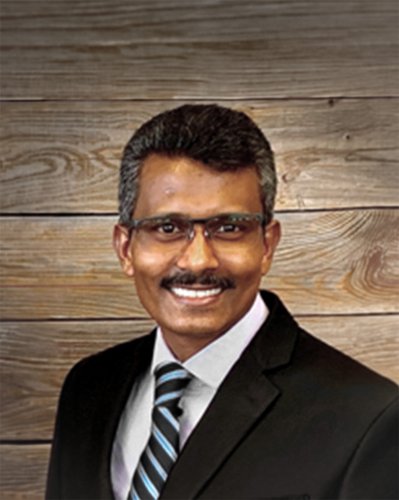
Suresh Chandra Bose
CEO of NexGen Technologies. First TMMi Lead Assessor in the Americas. Award-winning Consultant in the areas of Quality Engineering, PMO, PPM, Program Management, TMMI assessment/ implementation, Organization Strategy, Test Consulting and CIO/Governance Dashboard/Metrics. More than 25 years of Industry experience in Continuous Delivery transformations across the globe. Certified in numerous standards such as SAFe®, TMMi, Scrum, ISTQB, PMI®, ISO, ITIL CMMI and many more.) Speaker in international and leading Quality conferences.

Rex Black
Over 30 years of software and systems engineering experience, Rex Black is President of RBCS, a testing leader, providing consulting, training, and expert services. Rex is one of the most prolific authors in the field of software testing and has served as Chairman of the ISTQB® and ASTQB®. He has co-authored many ISTQB® syllabi and has chaired the Agile Working Group, the Advanced Test Manager Working Group and the Expert Test Manager Working Group.
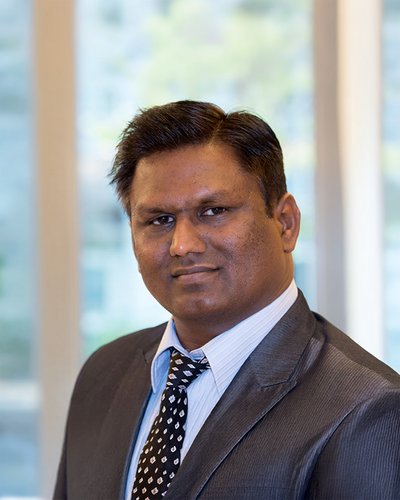
Sammy Kolluru
President of imbus Canada Corporation and Principal Consultant, specializing in agile project management and test process improvement. Over a decade of rich experience in agile software testing and quality assurance. Trainer for ISTQB® Certified Tester syllabus and Certified Agile Tester. Past member of the Board of Directors of the Canadian Software Testing Board and was member of the agile working group of ISTQB®.
imbus means satisfaction guaranteed!
We are committed to the training courses and academy projects we carry out with passion and a sense of responsibility. Thanks to our extensive experience and high quality standards, we achieve excellent satisfaction rates among our participants. Our various types of training, such as blended learning, classroom training and more, offer comprehensive training opportunities. We also offer internationally recognized ISTQB® certifications.
Well-known companies from all industries as well as federal and state authorities have been relying on imbus for many years and have their employees and test teams trained at the imbus Academy.



For 25 years, our academy has stood for outstanding training and the highest quality standards. We are proud to be one of the leading institutions in the training of IT professionals.
We would particularly like to highlight our ISTQB® certification program, which is recognized and valued worldwide. Our participants benefit from an internationally recognized certification that significantly improves their career opportunities.
imbus cooperates with renowned training providers and important trade associations. This way, we can provide a comprehensive service portfolio and state-of-the-art technical expertise at a constantly high level.

ASQF
imbus is active in the professional group software testing at the Arbeitskreis Software-Qualität und -Fortbildung e.V. (ASQF).

Canadian Software Testing Board (CSTB)
Canadian Software Testing Board (CSTB) is committed to the development, maintenance, and promotion of the ISTQB Certified Tester program in Canada. imbus is accredited as ISTQB training provider in Canada.

Element34
Element34 is a software development & consulting firm focusing on agile engineering practices and test automation solutions with Selenium. The company founders are key contributors and thought leaders to open source projects such as Selenium, Selendroid and ios-driver.

GASQ
GASQ is an international exam provider and a leading association in the software quality industry.

German Testing Board
imbus has been granted the status as "GTB Premium Partner" by the German Testing Board.

HOOD Group
The HOOD Group specializes in requirements engineering and is our training and consulting partner for these areas.
ISTQB®
ISTQB (International Software Testing Qualifications Board) has defined the "ISTQB® Certified Tester" scheme that has become the worldwide leader in the certification of competences in software testing. ISTQB® has created the world's most successful scheme for certifying software testers.
iSQI
The iSQI Group plays a significant role in certifying the know-how of IT professionals in over 100 countries on 6 continents in 10 languages. With over 30,000 certifications per year, iSQI paves the way for successful career development.

QualityWize™
QualityWize™ provides service, consulting and training for SW Engineering, Quality Assurance and Testing (QC).
Rex Black
Rex Black is an internationally renowned trainer, test management expert and imbus training partner for various subjects in Europe and overseas.
Your Contact to the Academy
Mrs. Katrin Krauss