
Quality for AI
Artificial intelligence (AI) is no longer a foreign concept to us humans in this age of digitalization. In recent years, it has become increasingly important in our everyday lives and has also made groundbreaking progress in research. The basic concept of an AI is to imitate human cognitive abilities. AIs have complex algorithms that must be extensively tested before they are released. This is because, depending on the AI type and area of application, errors can have serious consequences - for example, in areas such as autonomous driving. For reliable quality assurance, testing and consulting, we are your partner. The imbus team has made it its business to help customers develop trust in their software and, in the course of this, advises and tests your projects against professional quality standards - get advice on AI applications now and develop trustworthy artificial intelligence!
Let imbus test artificial intelligence
With increasing visibility and demand for Artificial Intelligence, it is important for us as experts in software testing to do our part to support sustainable trustworthy and secure AI development. With our trainings and workshops, we would like to help you understand important aspects and comprehend test methods. However, we are also happy to formulate and implement tests for you in-house. Which test methodology we use for your AI depends on the type of product. Since artificial intelligence involves complex systems that differ depending on the product, there is no generic test method. Moreover, it may well be that a combination of tests is applied to test your AI. For example, well-known techniques such as the white-box method and the black-box method can be combined here. But we also use more modern methods such as metamorphic testing. It is very important to us that our customers can have confidence in their products. Because even in the technical world of software and AI, there are certain requirements and standards that are regulated by law and must be met accordingly. For this reason, we not only support you in the execution of the tests, but also advise you extensively on the procedures and which is best suited for your project. We are your experts for planning, specification and execution of tests for AI-based.
Contact us and get more information about our approach to AI quality assurance. imbus is your partner for software testing and quality assurance. We test your AI so that you can develop confidence in your product and ensure compliance with all important standards and norms for AI.
Initiate a consulation now and have your AI tested by professionals!

Artificial Intelligence – The Definition
The diverse historical development of artificial intelligence has also influenced the definition of the term. The term “artificial intelligence” was coined by computer scientist John McCarthy in 1955 - he was considered one of the first pioneers of AI research. But what exactly is artificial intelligence? According to a definition by the Fraunhofer Institute for Cognitive Systems IKS, AI systems are those that use machine learning and programming, among other methods, to recognize and sort information in order to mimic human capabilities. Machine learning occurs primarily through one thing—repetition. To imitate human cognitive behavior, the processing structures of AI systems are modeled after the neural structures of the human brain. After all, AI also has a kind of neural network inspired by the connections between nerve cells in the human brain. In this network, constant repetition pays off, and the system learns to classify the input data correctly. Today, however, these intelligent systems can also be found in a wide variety of everyday contexts, such as in our interactions with smartphones. Autonomous driving is also developing in exciting ways and has now become established on our roads in the form of automated driving. In some countries, there are even ride-sharing services that transport customers from A to B autonomously and without a human driver; however, this is not yet permitted in Germany. The use of drones for deliveries—or even robots that deliver food—is no longer a novelty either.


Methods of Artificial Intelligence
The term Artificial Intelligence also refers to the complex field of research around such systems, which is constantly evolving. It can be divided into different subareas and methodologies. Methodologically, a distinction is made in the field of artificial intelligence between symbolic and subsymbolic AI. Subsymbolic AI is more complex than symbolic AI and thus additionally subdivided into different subareas.
Subareas of the subsymbolic AI
Subsymbolic AI can be divided into various subfields that are all interconnected. The term “artificial intelligence” serves as the overarching category for all these subfields. It encompasses neural networks, machine learning, and deep learning. Here, we provide you with an initial overview of quality assurance and software testing procedures related to artificial intelligence.
Arrange a consultation appointment now!
Machine learning
We have already briefly touched on the topic of machine learning in our definition. The name reveals that we are dealing here with the actual learning of a machine. As with us humans, this is mainly done by repeating and applying known information. In this way, the systems gain experience that they can apply in future processes. In machine learning, algorithms are trained to recognize patterns in data sets in order to establish correlations between them. A crucial point here, however, is the amount of data that is fed into the system - the more information, the more correlations the algorithm can recognize and the more accurate the results. This is because artificial intelligence processes data in order to deliver results or forecasts. The special feature here: According to the Fraunhofer IKS, no solution path is prefabricated, so the artificial intelligence algorithm finds its own path based on its experience.
Neural networks
For machine learning to work properly, an algorithm must be equipped accordingly. Neural networks are currently the most widely used algorithms for this purpose and are based on the nerve cell connections of the human brain. These networks consist of a large number of layers of nodes that are linked together. The basis for the neural network to learn is repetition. The network learns to classify data correctly and to adjust the weighting of the individual connections between the layers in the event of errors. This happens as long and as often as necessary until certain quality criteria are achieved. These include functional performance metrics such as accuracy, precision or sensitivity, as well as robustness and performance. The neural network is the backbone of deep learning algorithms.
Deep Learning
Deep learning is also part of machine learning and primarily uses complex neural networks and large amounts of data. In practice, deep learning is mainly used to understand texts and recognize images, but has a very broad application potential.With the help of deep learning, algorithms can solve complex tasks and problems with sufficient training and often do so faster and more effectively than a human.As the process is very computationally intensive and based on repetition, it can take months for artificial intelligence to find correct solutions or make good decisions.

The History of artificial intelligence
From the first theoretical approaches in the 1950s, through the development of symbolic AI, setbacks such as the AI winter, and the transition to neural networks, all the way to the breakthrough driven by big data and powerful hardware starting in 2010, artificial intelligence has evolved into a key technology of the future.
The historical development of AI began in the 1950s. Researchers such as John McCarthy and Marvin Minsky explored the question of how machines could exhibit intelligent behavior. During this period, the first algorithms for symbolic artificial intelligence were developed and tested using electrical circuits. The Turing test also originated during this time; its fundamental purpose was to determine whether a machine possesses or can imitate human intelligence.
About 10 years later, there were also advances in the world of technology. With the help of computers and transistors, the first steps toward programming AI were taken in the 1960s.
In the years that followed, the methodology of symbolic AI was further developed. The concept of expert systems had a particularly strong influence on research in the 1970s—a well-known example of this is the ELIZA chatbot.
However, throughout the history of AI, there have often been periods when research came to a standstill. This was the case in the 1980s, when a so-called “AI winter” occurred. During this period, the symbolic approach reached its limits, and it became clear that this methodology was incapable of imitating human intelligence. Consequently, the search began for new methods capable of generating human intelligence through machines.
In the 1980s and 1990s, neural networks—and with them the field of machine learning—gradually came to the forefront of research, and research into subsymbolic AI began.
In 1997, the first game console powered by artificial intelligence made headlines.
Once again, the technology was not advanced enough to achieve significant success, but this changed about 20 years later. With the dawn of a new millennium, 2010 saw increased use of affordable hardware with high storage capacities and computing power, making it possible to collect sufficient data. As a result, research into AI and machine learning could be further expanded.

The Turing test was invented in 1950 by the scientist Alan Turing. The test is designed to check whether an artificial cognitive system is comparable to a human being. An ongoing conversation is used to determine whether the system can give answers that are indistinguishable from those of a human being. But how exactly does this work? A total of three parties are involved in the test:
- Person A: The artificial intelligence being tested
- Person B: The human team partner of the artificial intelligence
- Person C: The human tester who asks the questions
The test takes the form of an ongoing conversation in which person C (the tester) is physically separated from persons A (AI) and B (AI team partner). During the test, both person A and person B try to convince person C (tester) that they are thinking humans. If person C cannot clearly distinguish the human from the artificial intelligence after the time has elapsed, the test is passed.
However, a number of important requirements must be met to ensure that the test is fair and orderly. First and foremost, it is important that the tester is physically separated from the tested parties so that an unbiased assignment is possible. In addition, a format is defined in advance that determines how the tester asks the questions. The context and subject area must also be defined in advance so that PCs and humans can provide answers on a fair basis. Finally, a fixed time window must be defined in which the test is to be carried out. Only with these specifications can it be fair and a conclusion drawn by the tester afterwards.
Successors to the Turing Tests
This criticism has since led to the development of additional testing methods that significantly expand upon the Turing Test. For example, there is the Lovelace Test, which primarily assesses the creativity of artificial intelligence systems. Furthermore, these systems are expected to perform tasks for which they were not programmed. This is intended to help determine whether the system possesses its own consciousness. In addition to the Lovelace Test, the Metzinger Test is another assessment method that puts the consciousness and memory of artificial intelligence to the test. Here, the system must actively participate in a discussion and convincingly argue for its own theory of consciousness.

The progress of recent years
In recent years, artificial intelligence has advanced significantly thanks to improvements in data availability, hardware, and deep learning, and today it is an integral part of our daily lives, particularly in the areas of image and speech recognition.
In addition, artificial intelligence, as well as the quantity and quality of data, have continued to make enormous strides. Digitalization plays a major role in this, and has also contributed to the availability of fast and inexpensive hardware.
In particular, the development of deep learning methods has enabled machines to recognize complex patterns in data and make predictions based on them. Artificial intelligence systems are constantly improving their ability to mimic human cognitive capabilities. One area where AI is particularly successful today is image and speech recognition. For example, image recognition algorithms are now capable of identifying and classifying animals and objects in photos. AI can now do this even faster than a human. Speech recognition systems like Siri and Alexa understand human language and can respond to commands. We encounter these types of AI systems every day, and they have been part of our daily lives for years. As early as the 1960s, IBM developed the first prototypes, such as the “Shoebox” assistant, which could understand ten numbers and 16 different words. Ten years later, the “Harpy” program could already understand 1,000 words—equivalent to the vocabulary of a three-year-old child. In 2011, the voice assistant “Siri” successfully entered the spotlight. Today, speech recognition is an integral part of many products.
Criticism toward Artificial Intelligence
However, alongside its many positive applications, artificial intelligence also presents challenges and risks. For instance, there are concerns that artificial intelligence could replace human jobs. There is also a risk that algorithms may not always make the right decisions, potentially leading to errors that could cause significant harm in the medium term. Some researchers are also exploring the concept of “technological singularity” and whether humans could lose control over technological progress.
Another issue is the question of responsibility. Who is responsible if an autonomous vehicle causes an accident or a medical algorithm makes incorrect decisions? It is important that these questions are clarified to ensure the safe and responsible use of artificial intelligence. Overall, artificial intelligence is a fascinating and exciting technology that can support us in many areas of life. However, to reap the benefits and minimize the risks, it is important that we humans address the challenges and ensure that artificial intelligence is used safely and responsibly. The historical development of AI shows that this field of research is vast and will require many more years of exploration.
When research turns into real AI projects, we are your ideal partner and will support your development through testing and quality assurance. We make it a priority to ensure that you have confidence in your product and that it meets the appropriate standards. Contact us today to schedule a consultation with our experts!
Weak AI
Weak AI has only limited flexibility and is usually confined to predefined problem areas. The learning ability of weak AI is limited to recognizing and matching patterns, as well as searching through large amounts of data within a specific context. It is only effective when tasks are clearly defined or specific problems need to be solved. However, it is particularly well-suited for automated processes, speech recognition, image and text recognition, or navigation systems. Voice assistants like Siri, Alexa, or Google Assistant are also examples of weak AI. In short, this means that weak AI focuses on performing specific tasks, often based on user input, and is therefore dependent on human intervention.
Strong AI
Strong AI is not yet accessible to us humans, but it has been the subject of research for years. The goal of strong AI is to enable natural and artificial intelligences—such as robots—to work together in a shared environment. This level of flexibility allows the machine to handle a wide variety of tasks, fostering mutual understanding and trust—in other words, it aims to create far-reaching human-machine collaborations. For many people, however, this is also a point of criticism regarding research into artificial intelligence. Some voices fear the onset of the “technological singularity” , which defines the point in the future when technological progress becomes uncontrollable and, above all, irreversible for us humans. The concern here lies primarily in the potential consequences, which are still unpredictable today. A strong AI can thus independently identify tasks and process them based on its own knowledge.
Different types of AI
The field of artificial intelligence covers a wide range of topics. It should therefore come as no surprise that there are different types of artificial intelligence. These differ primarily in their capabilities and in the complexity of their task-solving strategies.
AI types can be classified as follows:
- Reactive machines
- Systems with limited storage capacity
- Theory of mind
- Self-awareness
The latter two already fall under the category of strong AI and are currently still far from being feasible. Reactive machines and systems with limited storage capacity, however, are already integrated into our world.
Reactive machines are classified as weak AI, as they specialize in a single domain. Their purpose is to perform a single task—often achieving astonishing results.
Systems with limited storage capacity are a form of AI that possesses its own form of memory. This memory can be used by the AI for decisions and current actions and can even be expanded. This means that the AI makes decisions based on its artificial memory. However, since this memory is severely limited, the AI’s actions and decisions are also limited.

Artificial intelligence in everyday life
Consciously or unconsciously, artificial intelligence is firmly integrated into our world and is also regularly used by us humans. Whether it's recommendations from streaming providers, personalized advertising or the use of voice assistants - there's a good chance that you've already come across an artificial intelligence in your everyday life. Whether it's facial recognition on smartphones or Google translators, AIs and their work can be found in many places. If the AI cannot help, it forwards contact options so that an employee can provide advice.
The chatbot OpenAI has also attracted a lot of attention in just a few months. The AI can perform a wide variety of tasks based on user input. The best-known systems that use AI and are already used by many people around the world in everyday life are systems that make autonomous driving possible. Are you particularly interested in autonomous driving? Then find out more about our HolmeS3 research project, which focuses on safeguarding autonomous vehicles through scenario-based testing. With this type of artificial intelligence in particular, it is important to prioritize safety and trustworthiness. This is achieved primarily through highly professional testing and sustainable quality assurance. As experienced software testers, we are able to test your AI!
Artificial intelligence in the enterprise
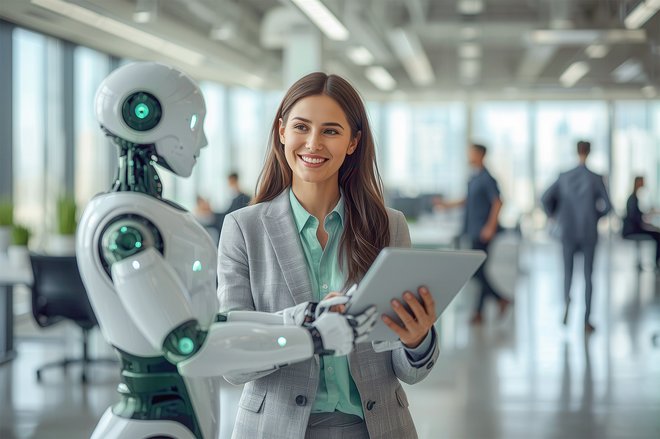
Artificial intelligence is increasingly being used in companies as a work aid. It is already being used in a wide range of applications to facilitate work processes and relieve employees. After all, AIs can automate certain processes and thus save entrepreneurs quite a bit of time and money. But before you can integrate an AI into your company, you should think about the possible applications and what benefits an AI brings with it. The German Research Center for Artificial Intelligence (DFKI) conducts research that also addresses the benefits of AIs in a wide variety of application areas.
According to the DFKI, the following industries are qualified for the application of AIs:
- Finance
- Medicine and care
- Commerce
- Logistics
- Industry
- Agriculture
- Education
There are big plans for integrating artificial intelligence into companies. Indeed, the general goal is to use new technologies such as AIs to make work processes faster, more effective, less expensive and more secure. For example, an AI can be a great help in evaluating large amounts of data or can also help with fraud detection or system security. Detailed information and research projects on the possibilities of the latest technology in specific work sectors can be found on the DFKI website. Companies can already use artificial intelligence for a wide range of tasks and relieve employees. AI can be a helpful teammate in logistics, customer service or marketing, for example.

imbus TestBench – the smart management system
At imbus, we work every day to test and maintain the software quality of our clients. To this end, we have developed our own smart test management system, TestBench, which is used by companies that want to develop high-quality products. Among other things, this management solution supports both manual and automated software testing.
imbus - Trusted Quality Assurance since 1992
For over 30 years, imbus has stood for trustworthiness and security in the context of software testing. We have made it our business to accompany and support companies in the development of software with our testing and consulting services. The growing interest in Artificial Intelligence has not gone unnoticed in our company - that is why we offer testing, consulting and also training specifically for companies that are enthusiastic about Artificial Intelligence, or are even developing AI on their own. As the digital landscape is constantly evolving and making tremendous strides, we want to help companies produce trustworthy as well as secure Artificial Intelligence. First and foremost, we provide consulting services for this purpose. We want you to understand what constitutes the quality of an AI and how to achieve it. In parallel, we are specialists in software quality testing and are your contact when it comes to accompanying development and providing you with detailed advice. Our services include the testing of AI, the formulation as well as the realization of tests to ensure reliable quality assurance - do not hesitate to contact us personally, we will be happy to answer any questions you may have!
Artificial Intelligence: Our ISTQB-Certified Tester Training Courses on AI
In the field of artificial intelligence, too, there is a growing need to build both individual and team knowledge in a targeted manner. At imbus, we have been happy to share our accumulated expertise in AI with our customers since 2020. In addition to the opportunity to conduct your own workshops with our specialists, you can prepare for the industry-leading ISTQB® Certified Tester in AI Testing (CT-AI) certification through our Academy. During the course, you’ll discuss key topics related to AI testing step by step and delve into testing methodologies for AI.
If you’re interested in learning more about how to use AI to improve your testing, we recommend the ISTQB® Certified Tester – Testing with Generative AI (CT-GenAI) course. Among other topics, you’ll explore the fundamentals of generative AI and how it supports existing workflows.
Submit a course inquiry now and become an ISTQB® Certified Tester in or with AI soon!
Are you looking for a suitable partner to assist you with this subject?
Whether you’re developing AI or want to use AI for testing, we’re here to help and advise you on your project. We’ll also help you implement the right quality measures and build trust in your product.
Ihr Ansprechpartner bei imbus
Mr. Tilo Linz